
Newest Translations!
Additional languages obtained since the
Second Edition
was published. See "300 Ways to Ask the Four Questions" for discussion
of dialects vs languages, rank, number of speakers and related questions.
For recordings for any of these languages, ask us or get the book!
Second Edition now features Na'vi,
Phoenician,
Chaucerian English,
Gulla, Tlingit, Rap and Reggae!
Skip to Living or
Constructed/Parody languages.
Ancient languages
Ma Nishtana in Hittite
Language of: Hattusa (modern-day Turkey)
Time Period: 16th C BCE - 13th C BCE
tamedaš išpantaš naššu harnantuš našma natta harnantuš azzikkeweni
kedani-ma išpanti natta harnantuš-pat adweni. [matzah question]
tamedaš išpantaš welkuwa humanta azzikkeweni
kedani-ma išpanti hazzuwanin-pat adweni. [herbs question]
tamedaš-šan išpantaš anzel zuwan weteni anda natta šiyanki-pat šuniyaweni
kedani-ma-an-šan išpanti anda dwanki šuniyaweni. [dipping question]
tamedaš išpantaš naššu ašantaš našma šašantaš azzikeweni
kedani-ma išpanti šašantaš-pat adweni. [leaning question]
tamedaš išpantaš šiwattaš šakliyaš iwar azzikeweni
kedani-ma išpanti haššuwaš iwar adweni. [ceremony question]
Translator: Professor Harry Hoffner
From: Chicago, IL
Prof. Hoffner is the world's foremost authority on Hittite. He founded the standard reference work, the Chicago Hittite Dictionary. The Biblical Hittites created an empire that spanned most of Asia Minor, the upper Mid-East and Upper Mesopotamia. Their military are known for making successful use of chariots. They called their language Nešili (the language of Nesa). In the Bible, the Hittites were never enemies; they supplied the Israelites with cedar, chariots and horses, as well as being a friend and ally of Abraham.
The Four Questions in Middle English
(Chaucerian)
Language of: England
Time Period: Norman invasion (1066) – Late 15th century
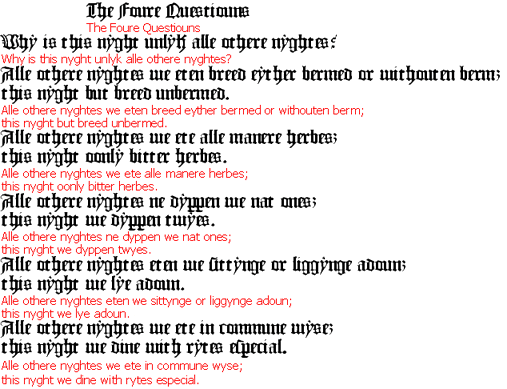
Translator: Professor George Petty, Professor Emeritus of English from Montclair State University
From: Denville, NJ
Middle English is the language of Chaucer and often known as Chaucerian English.
The Four Questions in Judeo-Italian
Language of: Ancient Italy
Time Period: 16th C-current
Number of Speakers: <250

1716:
 Download Judeo‑Italian for all Four Questions
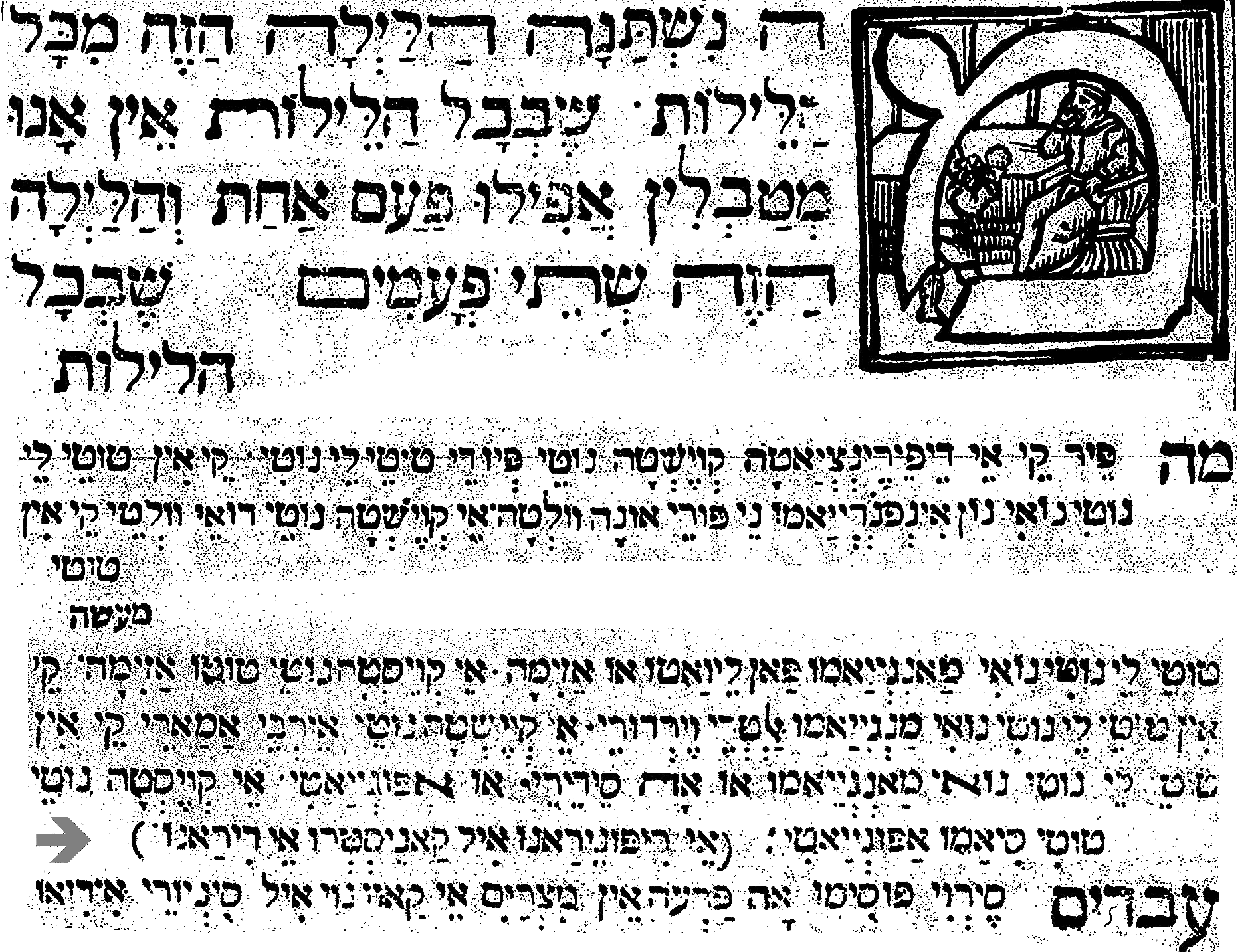
The Venice Haggadah (printed in 1609 and 1716) is the earliest publication containing Judeo-Italian. The Diskin Orphan Home reprinted facsimiles of these in 1973 and 1991, respectively. The text samples above, and the downloadble pdf, are our best interpretation of these facsimiles. Our text retains the obvious inconsistencies in the original Judeo-Italian versions.
Oddly, the 1716 Venice Haggadah contained a parenthetical (arrows in image shown below) after the Judeo-Italian Ma Nishtana. Transliterating the line into Latin letters, and translating that to English, yields the instruction "They will place back the basket and will say ...". The "basket" might refer to either the Seder plate or Matzah plate. This leads to the interesting speculation that an ancient Venetian practice was to raise the plate during the Four Questions, then replace it before Avadim Hayinu.
Translator: Leon Modena (1571-1648) / Professor Howard Adelman (21st C)
From: Venice, Italy / Toronto, Ont
Ma Nishtana in Phoenician / Canaanite
Language of: Phoenicia / (modern Lebannon, Syria and Israel)
Time Period: 11th C BCE - 1st C CE

Remainder of translation is in book
Translator: Rabbi Allen Darnov
From: Marlboro, NJ
Phoenician was likely the first alphabetic script to be widely used. Its
names and shapes can be traced to Egyptian Hieroglyphs.
Most Phoenician texts survive on sarcophagi.
The Four Questions in Ugaritic
Language of: Ugarit (Modern day Syria)
Time Period: 14th C BCE – 1180/70 BCE

Why is this night not like every night?
The remainder of the translation is in the book
Translator: Christopher Dost, adjunct instructor of religion and Bible at
Sacred Heart University, Nyack College and Nyack-Alliance Theological
Seminary.
From: Waterbury, CT
Language of Canaanites, precursors to Phoenicians.
They devised 30 symbols from which alphabets of all
phonetic languages are derived (Hebrew, Latin, Sanskrit, Aramaic,
Arabic, Greek, etc.).
Ugarit produced great royal palaces, temples, shrines and libraries.
Note: The Ugaritic character
 separates words.
Living languages
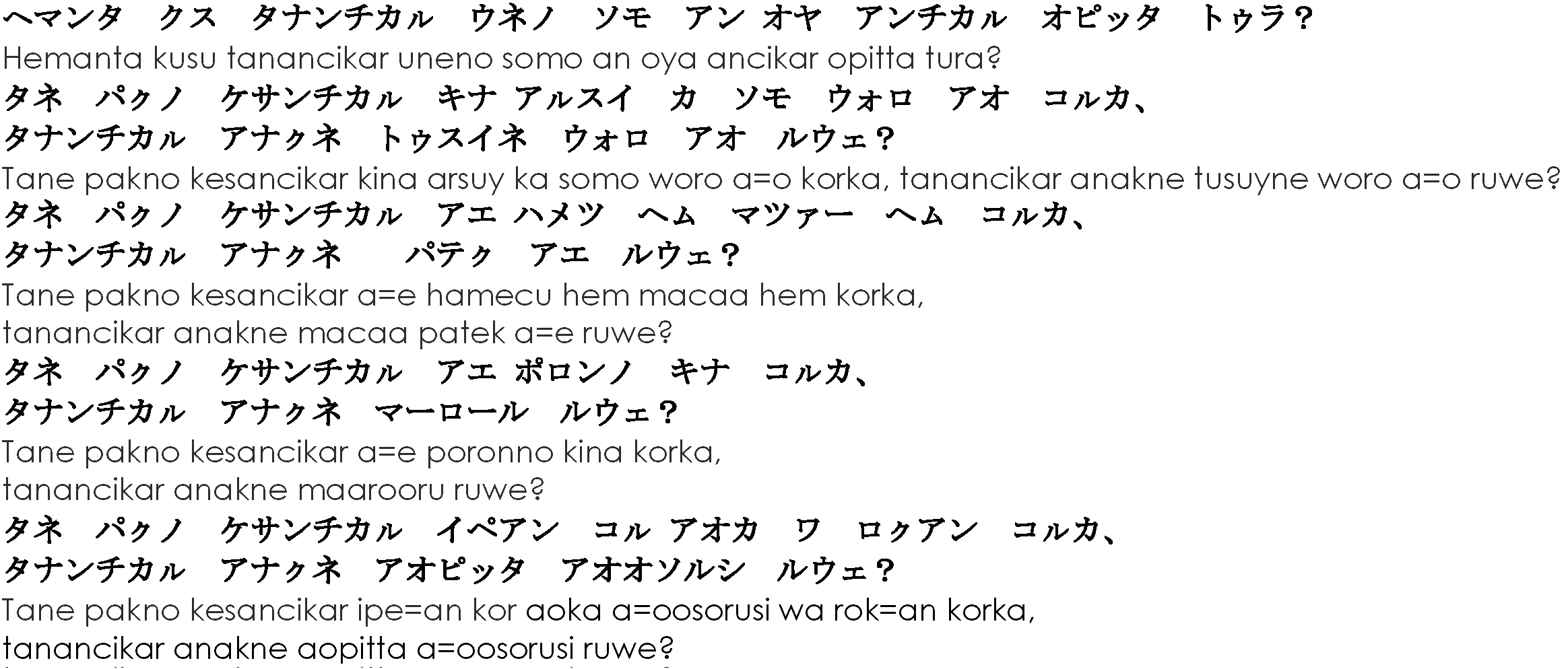
The Four Questions in Ainu
Language of: Japan
Rank: 6484
Number of Speakers: 10
Listen to audio recited by Seshimo
Listen to audio recited by Seshimo
Translator: Seshimo Masaya
From: Saitama, Miyashiro, Japan
Ainu is the engangered indigenous language of Japan. It is a language isolate, having no demonstrable relationship with other languages. Seshimo is not a native speaker, but is a polyglot who has studied Ainu extensively, participated in Ainu speech contests, and is a language activist, promoting language protection and revival. He has considerable fluency in Yiddish too! The '=' signs in the Latin transliteration represent the boundary between a personal suffix/prefix and the word root. Ainu is the 2nd rarest language in our collection.
Ma Nishtana in Hakatía / Hakitía
Language variant of: Brazil / Morocco / Venezuela / Canada
Approximate Rank: 5,632
Number of Speakers: At least 3-400
Notras masas makleamos palevi i maza;
hata en esta masa makleamos tansolo maza.
Hata masas makleamos zamea marfa di toda kalida;
hata masa tansolo makleamos zamea marfa komo un fel.
Hata todas las masas la sumejimos jamas;
hata masa sumejimos por dos tiempos.
Hata masas makleamos senfideados o jasenteados;
hata masa estamos jasenteados en grei.
Hata masas makleamos lo kontrario;
hata masa makleamos kon farja endiamantada.
Translator: Dr. Álvaro Fernando Rodrigues da Cunha
From: Saõ Paulo, Brazil
Hakatía is the language of Amazonian Jews. They were expelled from Spain in 1492. Because they moved to Morocco, their variant of Ladino contains Moroccan Arabic, in addition to 15th century Castilian Spanish and Biblical Hebrew. In prior centuries, these Jews fled the famines in Morocco, and settled in the rainforest of Brazil. They now primarily live in Manaus and Belém, Brazil.
Ma Nishtana in Caló / Iberian Romani
Language of: Spain / Brazil / France
Rank: 1,430
Number of Speakers: 70,000; estimates of over 500 to 10,000 speakers in
Southern Brazil
Nirai gruviins fiskali avrai dikameli;
Qui palinati gruviin fiskali afi dikameli.
Qui gruviins fiskali borsi simai onipehon,
qui gruviin afi fiskali borsi simai casti manti;
qui ati gruviins sifungo atema.
Qui gruviin balanti butema temporanti,
qui gruviins fiskali avetanetos;
qui gruviim palinati azentos currupin.
Qui gruviins fiskali otami;
qui gruviim fiskali fima nochesi.
Translator: Dr. Álvaro Fernando Rodrigues da Cunha
From: Saõ Paulo, Brazil
Caló is a Gypsy / Romani language spoken in Southern Brazil and elsewhere. It is sometimes used as jargon (a Cryptolect) to exclude or mislead people outside their group.
Ma Nishtana in Chilean Sign Language (LSCh)
Language of: Chile
Rank: ~2,560
Number of Users: ~17,000
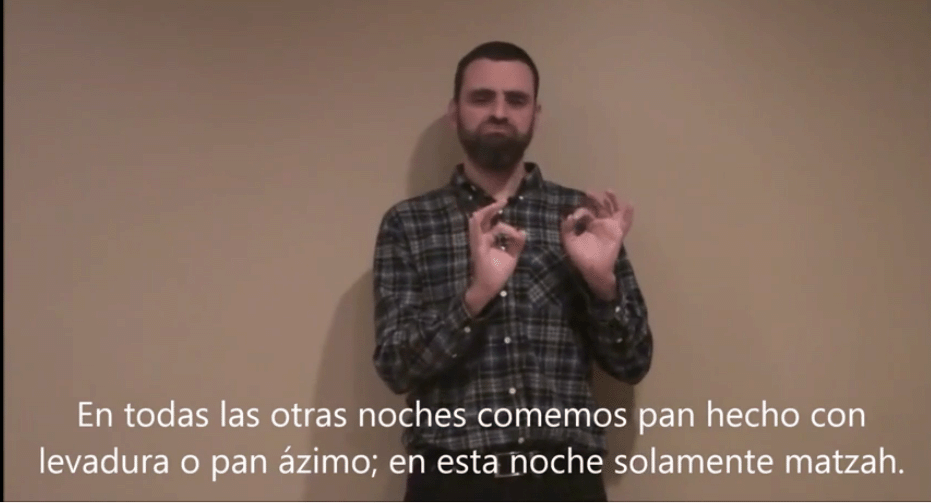
Signer: Juan Luis Marin Claro, Teacher for the Deaf
From: Santiago, Chile
Juan Luis taught LSCh at the Summer Institute of Linguistics and sat in on linguistic courses during 2014.
The Four Questions in Gen
Language of: Togo
Rank: 677
Number of Speakers: 327,000
Le zan wo keken mea miduna akpono alo matzah;
Le egbe be zan mea akponon dede kpoe.
Le zan kpoteawo mea miduna egbe vovowo;
Le egbe be zan mea egbe vevewo dede.
Le zan kpoteawo mea essi mou po mi kpo o;
Le egbe be zan mea essi pomi zi eve.
Le zan kpoteawo mea miduna nu le anyinope alo le anyimlope;
Le egbe ya mea mi le anyimlope.
Le zan kpoteawo mea mi duna nu le nonome ke dzea nu;
Le egbe pe zan ya mea mi dunu kudo konou toxe.
Translator: Kwadzo Bedzra
From: Lomé, Togo
Gen, also called Mina, Gebe and Popo, is mostly spoken in the maritime (southeast) region of Togo; there are a significant number of speakers in neighboring Benin.
The Four Questions in Hmong Daw (White Hmong)
Language of: China and Laos
Rank: 485
Number of Speakers: 613,400
Nyob rau txhua hmo, peb noj ncuav xyaw keeb lossis mastxas;
nyob rau hmo no, peb tsuas yog mastxas xwb.
Nyob rau txhua hmo, peb noj txhuas yam txujlom;
nyob rau hmo no, tsuas yog txujlom iab xwb.
Nyob rau txhua hmo, peb tsis ntsw ib zaug li;
nyob rau hmo no, peb ntsw ob zaug.
Nyob rau txhua hmo, peb noj mov zaum ntseg lossis pw pheeb ib sab;
nyob rau hmo no, peb pw pheeb ib sab.
Nyob rau txhua hmo, peb cia li noj mov li txhua zaus;
nyob rau hmo no, peb noj hmo ua koobtsheej tshwjxeeb.
Translator: Mia Lor
From: Sheboygan, WI; parents from Laos
Ma Nishtana in Judeo-Greek / Romaniote / Yevanic
Language of: Greece
Rank: 6301
Number of Speakers: Less than 50
Ολεσ τσ' αλλισ νυχτισ τρωμι χαμετσ η ματσα;
κι μον' τουτ' τ'νυχτα μονο ματσα.
Ολεσ τσ' αλλισ νυχτισ τρωμι ολα τα χορτα;
κι μον' τουτ' τ'νυχτα τρωμι πικρα χορτα.
Ολεσ τσ' αλλισ νυχτισ δεν βουταμι καμια φορα;
κι μον' τουτ' τ'νυχτα βουταμι δυο φορεσ.
Ολεσ τσ' αλλισ νυχτισ τρωμι καθισμεν';
κι μον' τουτ' ολοι ακουμπισμεν'.
Translator: Allegra Matsa
From: Ioannina, Greece
Judeo-Greek is one of the most endangered Jewish languages, and is certainly the rarest Jewish language we've collected.
The city of Ioannina is the ancestral home of the Romaniote, a community that was in Greece from before 250 BCE. They are distinct from the Sephardim of Spain and Portugal, having different customs and language. Most Romaniote communities were assimilated by the influx of more numerous and prosperous Sephardim who arrived after the Inquisition.
Allegra is the daughter of Judeo-Greek speaking parents who grew up in Ioannina.
Ma Nishtana in Kriol
Aboriginal Language of: Australia
Rank: 3031
Number of Speakers: 10,000
Langa najalot naitaim wi dagat bred or demba o najan daga garrim draibam;
la dijan naitaim wi dagat matsah im lilbit olijem vaitawit nomo garrim draibam.
Langa najalot naitaim wi dagat holot difrenwan daga;
la dijan naitaim barlkiny jaldu.
Langa najalot naitaim, wi nomo pudimin daga langa woda;
la dijan naitaim wi pudimin langa solwoda dubala taim.
Langa najalot naitaim wi jidan bla dagat o maitbi wi leidan;
Langa dijan naitaim wi leidan bla dagat.
Listen to audio recited by Dr Margaret Sharpe
Listen to audio recited by Dr Margaret Sharpe
Translator: Dr Margaret Sharpe
From: Armidale, NSW, Australia
Kriol is spoken across the north of Australia, primarily the region of the Roper River, which is where Margaret learned the language. Contact the author to obtain the gloss of Krio back into English.
The Four Questions in Kurdish,
Central (Sorani dialect)
Language of: Turkey, Iraq/Kurdistan
Rank: 160
Number of Speakers: 3.7 million

Listen to audio recited by Şwan
Listen to audio recited by Şwan
Translator: Şwan Rojhełat
From: Meriwan, Eastern Kurdistan (Iran)
The Four Questions in Kurdish, Northern
Language of: Turkey, Iraq/Kurdistan
Rank: 84
Number of Speakers: 9 million
K = Kurmanji dialect
B = Behdini dialect

[B] Bo çî evşeve ji şevêt dî ya cuda ye?

Listen to Kurmanji recited by Deniz
Listen to Kurmanji recited by Deniz
Listen to Behdini recited by Newzad
Listen to Behdini recited by Newzad
[K] Translator: Deniz Ekici
From: Amed (Diyarbakir), Northern Kurdistan
[B] Translator: Newzad Hirorî
From: Duhok, Iraqi Kurdistan
Ma Nishtana in Kyrgyz
Language of: Kyrgyzstan
Rank: 197
Number of Speakers: 2,893,354
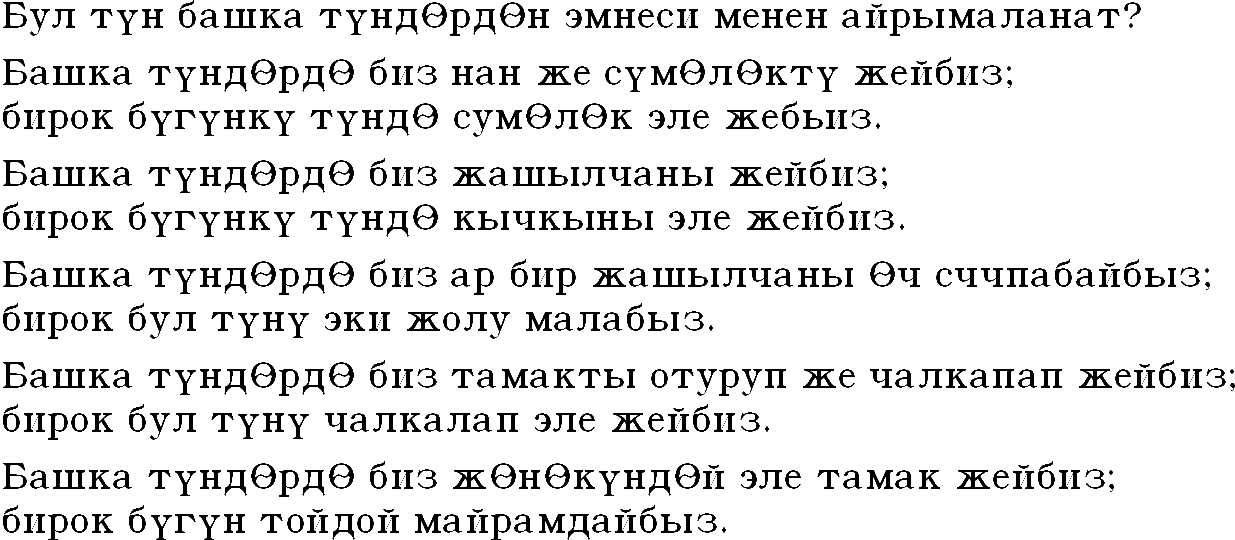
Translator: Mairam Orunbaeva
From: Bishkek, Kyrgyzstan
The Four Questions in Pennsylvania German (known as Pennsylvania Dutch / Amish)
Language of: USA
Rank: 1,267
Number of Speakers: 98,700
An all die annere Nachde esse mir ehnder Brot oder Matzah;
an die Nacht esse mir yusht Matzah.
An all die annere Nachde fresse mir alle sadde Greider;
an die Nacht esse mir yusht biddera Greider.
An all die annere Nachde mir dunka gore net;
owwer die Nacht mir dunka zwee mol.
An all die annere Nachde liega mir uns hie odder hocke mir fer esse;
an die Nacht mir liega uns hie.
An all die annere Nachde mir esse yusht wie annere Leit;
owwer die Nacht mir esse mit en abaddich Zeremonie.
Translator: Leroy Brown
From: Topton, PA
Ma Nishtana in Salish
Language of: USA (WA)
Rank: 6293
Number of Speakers: ~50
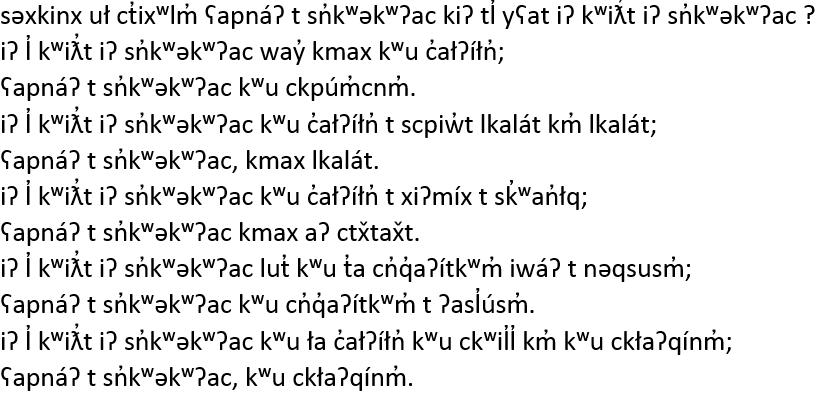
Translator: Christopher Parkin, Principal, Salish School of Spokane
From: Spokane, WA
Salish is a large language family of 29 languages divided among Coast Salish (22 languages) and Interior Salish (7 languages). Chris and his family speaks the Southern Interior Salish variety called Colville-Okanagan Salish. Like other nearby languages, in Salish there is no clear distinction between nouns and verbs.
The Four Questions in Svan
Language of: Georgia
Number of Speakers: 15,000
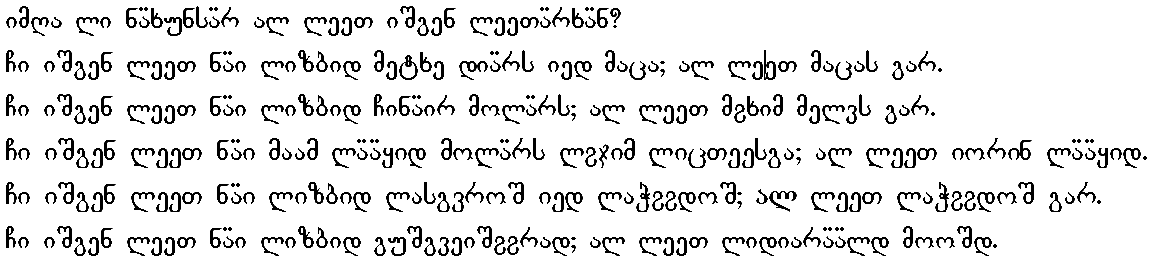
Translator: Vakhtang Pilpani
From: Tbilisi, Georgia
Language of the Svaneti region, in northern Georgia
The Four Questions in
Tem
Language of: Togo
Rank: 705
Number of Speakers: 30700
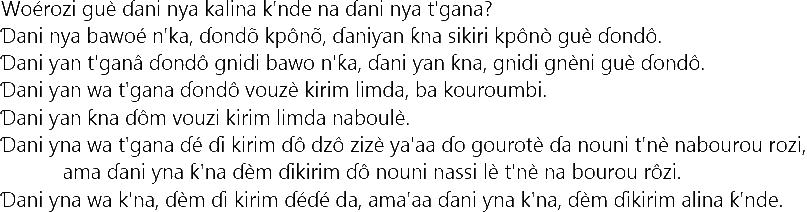
Translator: Folly Kossi Senah
From: Sokode, Togo
Transcribed by: Kwadzo Bedzra, our speaker for Togo's Gen
The majority of the Tem ethnic group (also known as Temba or Kotokoliare) live in Togo, with the remainder of the speakers living in Benin and Ghana.
The Four Questions in Yugambeh-Mibinyah
Aboriginal Language of: Australia
Rank: 6489
Number of Speakers: 10
Munu yawun-yawun jalehla ngali burehn bahn-nyun;
gali yawun-yawun jalehla madjah Vita Wheat-nginyehr bahn-nyun-jam.
Munu yawun-yawun, jalehla ngali garalbu nungany;
gali yawun-yawun jalehaa julay nungany.
Munu yawun-wayun yugam ngali jalehla nungany guhngga.;
gali yawun-yawun ngali gayi-gayibilimahla nungany birendah.
Munu yawun-yawun yahn-nyun jalehla;
gali yawun-yawun yunanyun jalehla.
Listen to audio recited by Dr Margaret Sharpe
Listen to audio recited by Dr Margaret Sharpe
Translator: Dr Margaret Sharpe
From: Armidale, NSW, Australia
Mibinyah dialects of the Yugambeh people are those that use the word "mibiny" for an Aboriginal man. Contact the author for a gloss of the translation back into English.
Ma Nishtana in Zaza
Language of: Turkey
Rank: 1,048
Number of Speakers: 140,000
Heme şewandê bînande ma nano newsnaye û nanê tîr wenê;
la emşo ma bi tenîa nanê tîr wenê.
Heme şewandê bînande ma her babet khoyî wenê;
la emşo ma bi tenîa tiroyo tûn wenê.
Heme şewandê bînande ma caran vaşê xo solawî mîan nêkenê;
la emşo ma do di qorî dekerê.
Heme şewandê bînande ma ronişten ra zî kewten ra zî nan wenê;
la emşo ma pêro (heme) kewtey ê.
Listen to audio recited by Bahri
Listen to audio recited by Bahri
Translator: Bahri Demir
From: Cermik (near Diyarbakır), Turkey
Zaza is sometimes considered a dialect of Northern Kurdish, but most linguists analyze it as a separate language.
Constructed languages
The Four Questions in Binary Code (ASCII English)
Language of: Computers
Number of Users: Billions and billions
101011111010001111001 11010011110011 1110100110100011010011110011 11011101101001110011111010001110100 110010011010011100110110011011001011110010110010111011101110100 1100110111001011011111101101 110000111011001101100 11011111110100110100011001011110010 1101110110100111001111101000111010011100110111111
The remainder of the translation is in the book
Binary is the code used by digital computers. The "dialect" shown here is ASCII. There are other character coding schemes, e.g. EBCDIC and others, and, of course, there is binary coding for non-latin characters used in other languages. For human readability, the spaces (100000) are not translated above to show word boundaries. The actual binary for just the intro question would look like this.
10101111101000111100101000001101001111001101000001110100110100011010011110011010000011011101101001110011111010001110100010000011001001101001110011011001101100101111001011001011101110111010001000001100110111001011011111101101010000011000011101100110110001000001101111111010011010001100101111001001000001101110110100111001111101000111010011100110111111
The Four Questions in Blissymbols
Language of: Alternative communication
Number of Users: 10,000??
 Download blissymbols
for all Four Questions
Download blissymbols
for all Four Questions
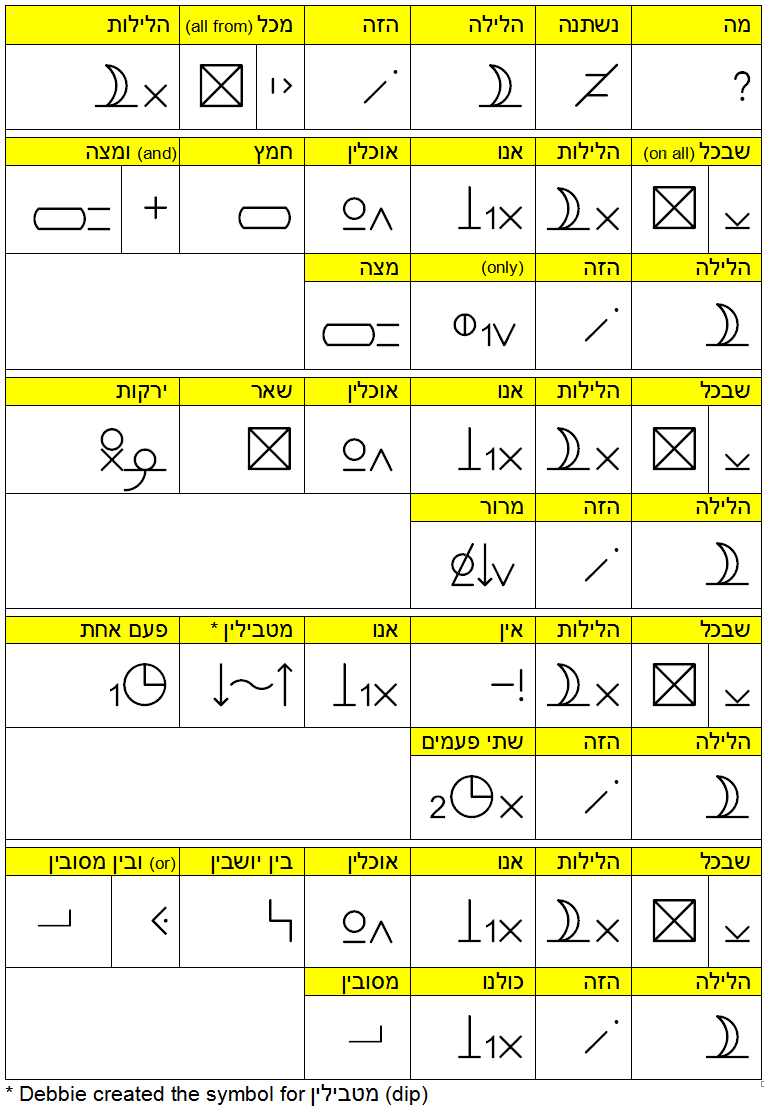
Translator: Debbie Epstein Rahav
From: Katzrin, Golan, Israel
Blissymbols were invented by Charles Bliss in 1942 to allow communication between people speaking different languages. Bliss was inspired by Chinese characters, which he saw in the Shanghai Ghetto when he was a refugee from Nazi persecution. Blissymbols have become a method of communication for people with communication disorders such as cerebral palsy. Although Debbie has studied the language carefully, she points out this rendition is not necessarily authoritative.
The story of Charles Bliss's life quest, told on RadioLab (story starts at 7:45). The story of Charles Bliss's life quest, told on RadioLab (story starts at 7:45).
The Four Questions in Cockney / Cockney Rhyming Slang
Dialect from: London's East End
Number of Speakers: Unknown
'Ere - why's this nigh' no' the same as 'uvver nigh's?
'Cos on aw uvver nigh's we nosh eever nawmuw Uncle Fred or motzes;
t'nigh' only motzes.
On aw uvver nigh's we nosh aw kinds of Uncle Reg;
t'nigh' only bi'er 'erbs.
On aw uvver nigh's we don't dip nuffink;
t'nigh' we dip two times.
On aw uvver nigh's we nosh eever sittin' dahn or lyin' dahn;
t'nigh' we lie dahn.
On aw uvver nigh's we nosh ordin'ry;
t'nigh' we posh i' up!
Translator: Annette Leon
From: London's East End
Variously termed Cockney, Cockney Rhyming Slang [CRS], and London's East Ender accent, Cockney is probably England's most famous accent. Traditionally it is associated with the working-class individuals raised within earshot of the Bells of St Mary-le-Bow church). It was featured in several films, most popularly by Dick van Dyke in Mary Poppins. Several famous people are Cockneys, such as Adele, Michael Caine, Terence Stamp. Rhyming slang's method substitutes words with their rhyming phrase. In this Four Questions rendition, two bits of CRS has "Uncle Fred" for bread, and "Uncle Reg" for veg(etables).
Ma Nishtana in Doge
Language of: Internet Memeland
Time Period: 2013 to current, if it's lucky
Primary Speakers: Shiba Inu Dogs
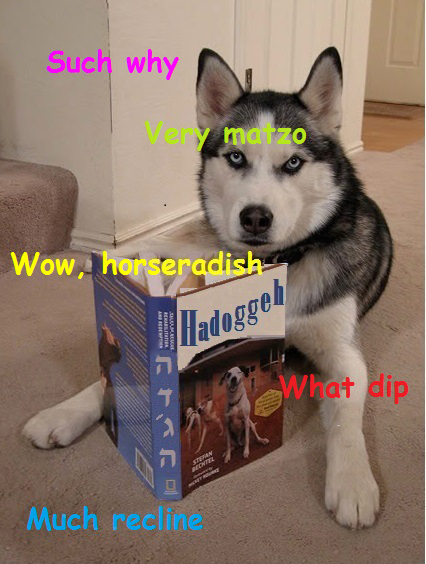
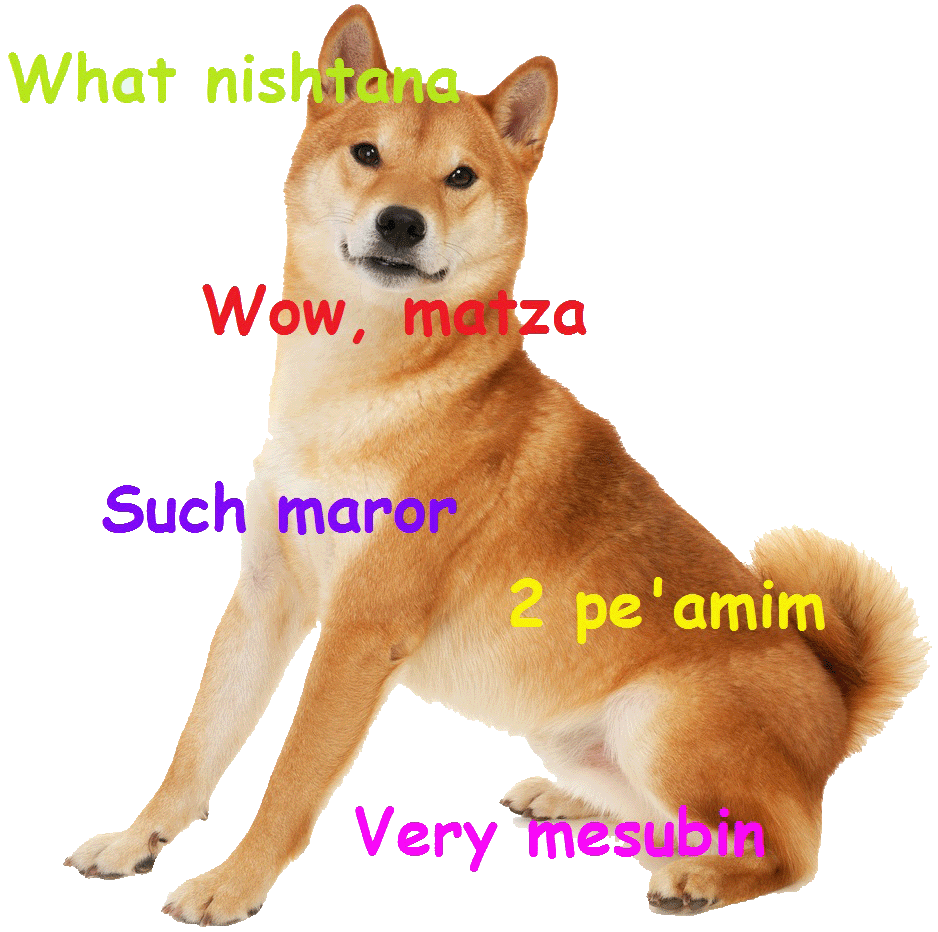
Translator: We so lucky! Ruth Ben Mayor
From: Kibbutz Ein-Shemer
The Internet Meme Doge represents the broken English inner thoughts of the beings in the pictures. The dog breed Shiba Inu is often used, though others are sometimes used, as shown here. Note the funny English and Hebrew titles of the book.
The Four Questions in Dothraki
Language of: Dothraki Sea (From HBO's Game of
Thrones)
Number of speakers: Approx one dozen fluent (eg: professional) speakers;
many more non-fluent
Kash ei eshna ajjalani kash kisha adakhaki che havon ma ricchikhoon che havon o ma ricchikhoon;
kash jin ajjalan kash havon oma ricchikhoon disse.
Kash ei eshna ajjalani kash kisha adakhaki san dahanasari;
kash jin ajjalan kash choak disse.
Kash ei eshna ajjalani kash kisha vos awoki vos at ekh akka;
kash jin ajjalan kash kisha awoki atak ekh.
Kash ei eshna ajjalani kash kisha adakhaki che nevayi che chilayi;
kash jin ajjalan kash kisha chilaki.
Kash ei eshna ajjalani kash kisha adakhaki k'athhramvenari;
kash jin ajjalan kash kisha adakhaki k'athchomofari.
Listen to audio recited by Dothraki's creator
Listen to audio recited by Dothraki's creator
Translator: David J Peterson, President of the Language Creation Society, Dothraki's creator
From: Santa Ana, CA
Dothraki was created by David Peterson for the HBO show "Game of Thrones." The Dothraki are the inhabitants of the Dothraki Sea in the medieval fantasy "A Song of Ice and Fire" series written by George R. R. Martin.
Only one word was added to the Dothraki vocabulary to enable a seder in Vaes Dothrak: havon (n) bread, as the Dothraki don't have "bread" in the usual sense. Other words were adapted: ricchikh (a yeast or kefir) came from ricch, which has to do with bubbling. Dahanasar (n) is an extension of a particular type of grass (dahan), and can be translated variously as roughage, herbs, greens or edible greens. Awolat (v) took on a new shade of meaning (dip); it ordinarily means "to submerge" or "to immerse".
The Four Questions in ELIA Frames
Language of: The vision impaired
Time Period: 1987-current
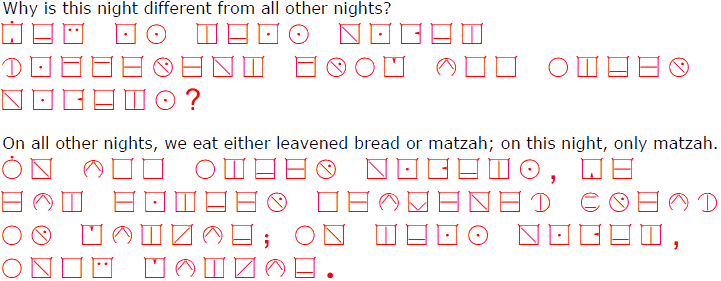
Download ELIA Frames for all Four Questions

ELIA Frames was created by Andrew Chepaitis as an easier-to-learn alternative to Braille. His initial design was created in 1987, with the first computer font and lab testing beginning in 1998. The outer frame (circle, square, house) combine with its interior elements to mimic recognizable characteristics of standard alphabets. ELIA's claim is that users can achieve, in a few weeks, reading speeds that Braille users take 5 years to attain.
Ma Nishtana in Emoji
Language of: Japan, spreading worldwide
Time Period: 1998-current
Number of Users: Millions

Translator: Cantor Steven Walvick
From: Toms River, NJ
The Japanese word Emoji means pictograph, or "picture-character." The standardized icons were originally built into Japanese handsets. Many emoji are Japanese-culture specific, for instance representations of brilliant homework or popular foods like ramen. After introduction in Japan, emoji spread worldwide with their introduction into smartphones by non-Japanese vendors.
Inspired by the creation of the SQL version of the 4Qs by Cantor Stuart Binder during our book talk, Cantor Walvick created the Emoji 4Qs before our book talk in April 2014.
Ma Nishtana in Ithkuil
Language of: Logic and Philosophy
Number of Fluent Speakers: Barely 1
Created over: A period of more than 25 years
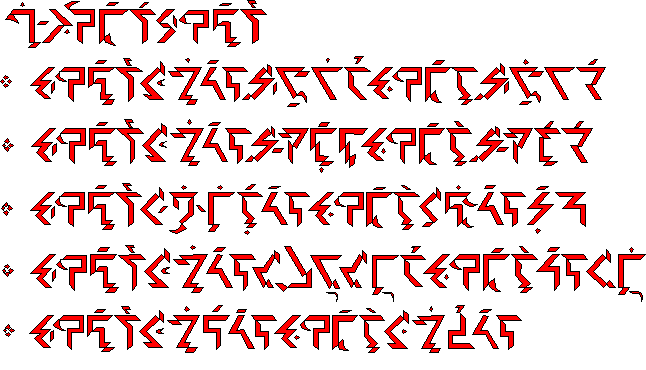
Listen to audio recited by Ithkuil's creator
Listen to audio recited by Ithkuil's creator
Translator: John Quijada, Ithkuil's creator
From: Northern California
Contact us through the website to obtain the translation annotated with interlinear grammatical elements, pronunciation guide and gloss.
John's goal in creating Ithkuil was to develop an idealized language that applied the highest degree of precision, logic, efficiency and accuracy possible in spoken language, and to mimimize the ambiguity, redundancy and arbitrariness that exists elsewhere in human language. Many concepts that take paragraphs of English to precisely describe can be conveyed in just 2 or 3 Ithkuil words. It is "a monument to human ingenuity and design" in the words of David J Peterson. The name Ithkuil roughly means "hypothetical representation of a language." See also this New Yorker article and Ithkuil's website.
The Four Questions in
Na'vi
Language of: Pandora
Number of Speakers: A handful of native speakers have been identified
Biblical Quote: Eliyahu Ha-Na'vi
Fìtxon na ton alahe nìwotx
pelun ke lu teng?
this-night like nights other all why not is same
Tonìri alahe, awngal
yom hametsìt,
yom matsat, ke tsranten;
fìtxon yom matsat nì'aw.
as-for-nights other we eat hametz eat matzah not matter
this-night eat matzah only
Tonìri alahe, awngal yom fkxenti
lerìk nìwotx;
fìtxon yom sat a lu syä'ä
nì'aw.
as-for-nights other we eat vegetable-food leafy all
this-night eat those that are bitter only
Tonìri alahe,
awnga ke yemfpay si keng 'awlo;
fìtxon yemfpay si melo.
as-for-nights other we not dipping do even once
this-night dipping do twice
Tonìri alahe, awngal
yom wutsot tengkrr hereyn nìpxim,
tengkrr teruvon, ke tsranten;
fìtxon yom tengkrr teruvon.
as-for-nights other we eat meal while sitting erect
while leaning not matter this-night eat while leaning
Tonìri alahe, awngal yom
wutsot nìfya'o letrrtrr;
fìtxon yom nì'eoio.
as-for-nights other we eat meal in-manner ordinary
this-night eat ceremoniously
Listen to audio recited by Na'vi's creator
Translator: Dr Paul Frommer
From: Los Angeles, CA
Na'vi was created by Dr Frommer for the lovely blue
aliens in the 2009 movie, Avatar.
It is intended to sound both alien and pleasant.
Words that needed to be added to the lexicon for a Na'vi
seder were:
hametsì: 'hametz';
matsa: 'matzah';
yemfpay: 'dipping, immersion';
fkxen: 'food of vegetable (as opposed to animal) origin';
pxim: 'erect, straight up and down';
tuvon: 'to lean'; and 'eoio: 'ceremonious'.
Ma Nishtana in The Four Questions in Pirate
Language of: Well, Pirates!
On all other nights we be eatin' stale bread an' grule!
On this night we be eatin' only RUM!
GAarrr! On other eves we be eatin' of the sweet spices of the East India Tradin' Company!
On this night we be eatin' bitter RUM!
On most a starry night abroad the seven seas, we daren't dip our bread for fear of scurvy!
On this night, we be dippin' twice in a barrel of RUM!
Arrr! We be eatin' most suppers standin' in the comfort of the Galley!
Tonight we rest in our hammocks to Dine!
On other nights we eat WHENEVER WE BE PLEASIN' TO!
On this night we break out ALL THE RUM!
Translators: Will and Eric Roper
From: Berkeley Heights, NJ
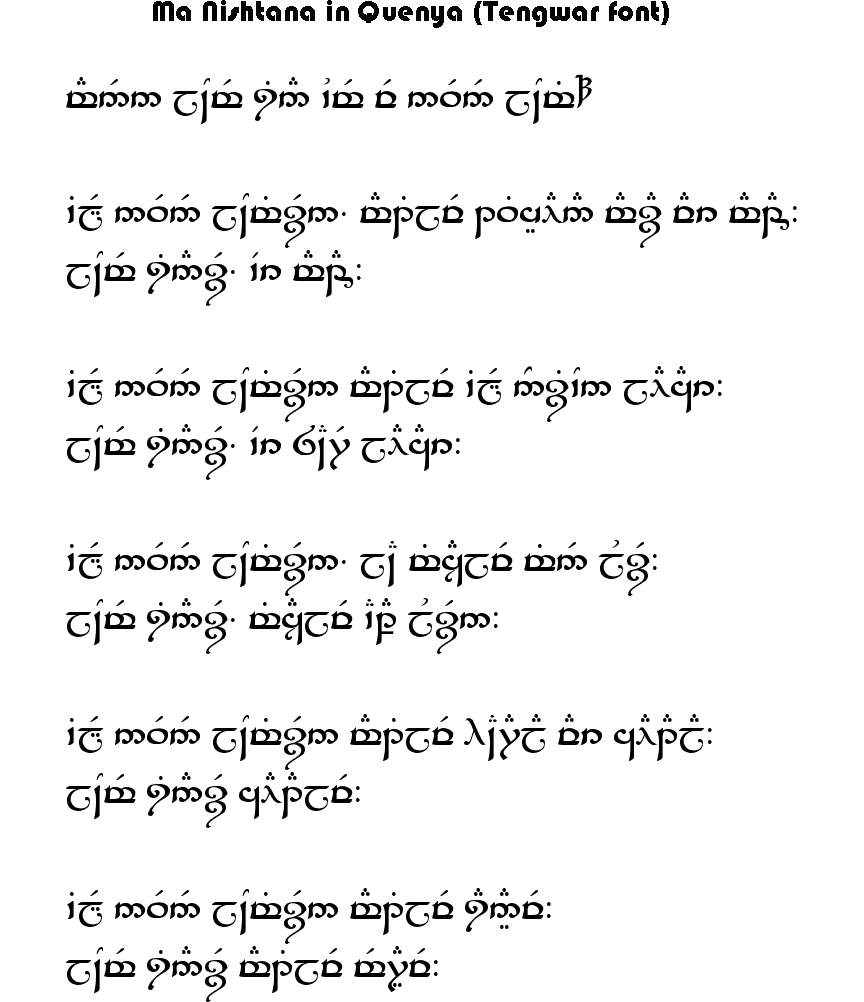
The Four Questions in Quenya
Language of: Tolkien's Lord of the Rings

The full translation as Tengwar is shown here.
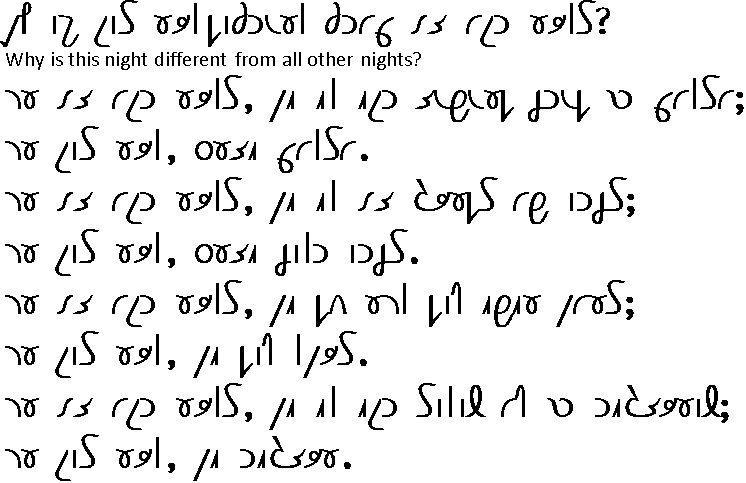
Ma Nishtana in Quickscript
Language of: Spelling Reform
Time Period: 1966-current
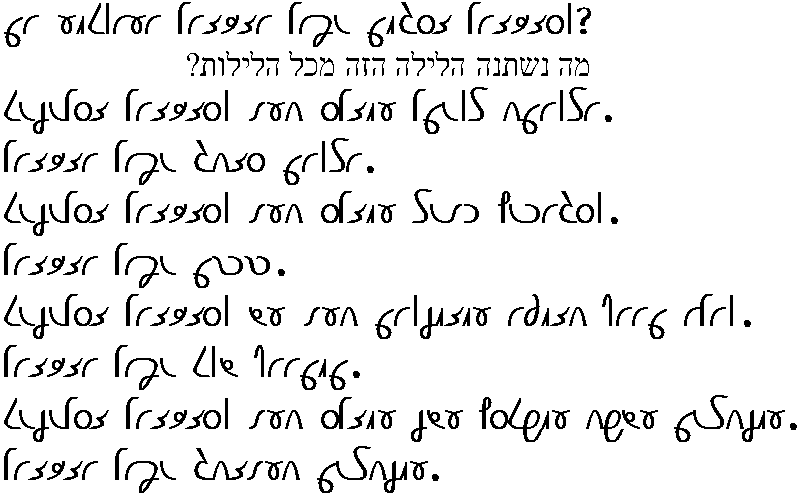
Translator: Joshua Rosenthal
From: Baltimore, MD
George Bernard Shaw, a noted advocate for spelling reform, left much of his fortune to develop an alphabet that solved problems of conventional English spelling. (Shaw was unhappy with Isaac Pittman's earlier phonetic shorthand.) Ronald Kingsley Read merged the design winners of a contest held to realize Shaw's goal, and his one-symbol-per-sound alphabet was called Shavian (after Shaw's name). He later modified it as Quickscript for easier writing and everyday use. General adoption has eluded all alternate English alphabets, and Quickscript is now only known by linguaphiles, English lit nerds, and selected Seder guests. The phonetic equivalences for each letter is shown here.
The Four Questions in
Solresol
Number of Speakers: a few enthusiasts

Listen to audio recited by translator
Midi file
Listen to audio recited by translator
Midi file
Translator: Mark Shoulson
From: Highland Park, NJ
Solresol is a musical language developed by François Sudre between
1827 and 1866. Words are made up of 1 to 5 syllables (most often
the solfege "do re mi" syllables).
Musical intervals convey conceptual relationships: I=do-re,
you=do-mi; while mine=re-do and yours=re-mi. The
apostrophe (la-si') is a plural marker. Romeo and Juliet was
performed entirely in Solresol at CUNY in 2007.
The Four Questions in Stenography/Shorthand
(Dialect: Gregg)
Language of: Secretaries
Time Period: 1888-current
Number of Transcribers: Rapidly declining; over one million in 1980's
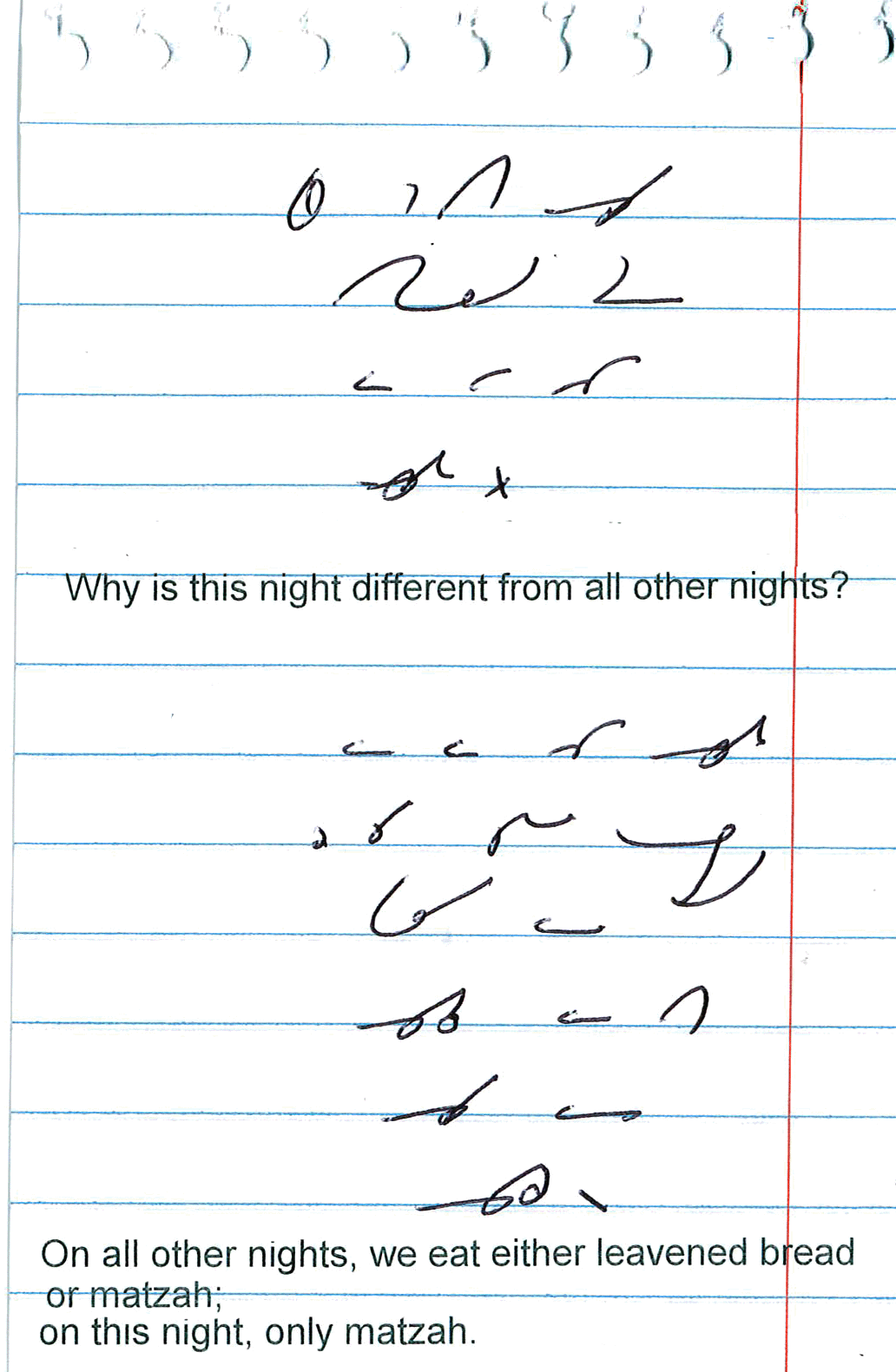
Taquigrafia, Spanish Gregg/Shorthand/Steno:

Transcriber: Jo Ann MacDonnell
From: Fair Lawn, NJ
Speed writing has been around for over 2,500 years, with the earliest English script versions dating from the 16th C. John Robert Gregg's system was more common in the USA, while Isaac Pitman's system was used more outside the USA. Gregg takes a great deal of practice to master, but very fast speeds are possible (280 words per minute) and are still legible to the writer.
Ma Nishtana in The Four Questions in Twitter
Language of: Microbloggers
Time Period: 2006-current
Number of Users: Hundreds of millions
#ThrowbackThursday to yesterday when I was allowed to eat bread. Tonight we eat #matzah
#tbh I dont really want to eat maror #SorryNotSorry #JewProblems
Getting to double dip vegetables tonight>> #Swag
Shout out to @Moses for letting us sit comfortably tonight on pillows #YOLO
Translator: Adina Kling
From: Framingham, MA
Explanations for Twitterphobes:
ThrowbackThursday: Old picture of you/your friends that you post on Thursdays
tbh: To be honest
sorrynotsorry: Sorry but not really sorry
yolo: You only live once
>>: Hearts for happiness
swag: Awesome, cool
Definitions of hashtags courtesy of tagdef.com
Ma Nishtana in Wakanda
Language of: Wakanda (film: Black Panther)
Number of Speakers: how many actors spoke it?
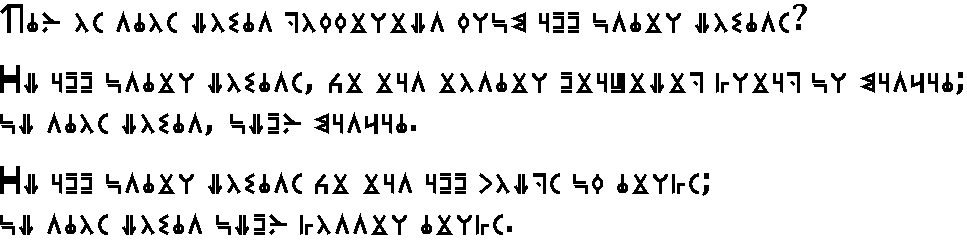
Download Wakanda for all Four Questions

Wakanda is a fictional East African nation appearing in Marvel Comics. It is the home to the superhero Black Panther. Wakanda first appeared in 1966, Fantastic Four #52, created by Stan Lee and Jack Kirby. This Wakanda font is associated with the fictional language.
Ma Nishtana in The Four Questions in Yeshivish
(aka FrumSpeak)
Language of: Yeshivot everywhere
Time Period: Modern
Number of Speakers: Be'erech (approximately) 1,000, maybe 50,000
From four (grahda, the Mishna holds five) shvere shailos, it's shayach to boi ois a yesoid that the whole matzav of this night is einoi doimeh to stam a night in the yuhr:
Le'dugma, what's pshat a whole year, lu yetsuyar you bedi'eved eat matza instead of bread, there's poshut no nafka mina (except by the sfardim who hold you make a mezoinos) that would be machriach you to be mechalek matza from stam pas, but by the seder, it's kuloi matza and not stam als the issur chometz sheboi, butbe'hechrach als a bazundere chiyuv of achilas matza gufa?
Tzvaytens, it bleibs a tzarich iyun that stam by supper, even if bichlal you eat the vegetables, you eat eppis normahle zachen, ma she'ein kein by the seder you have to shaf davka (or loit some girsa'os it's mashma "only") whatever's be'nimtza that pahsses for a sheim maror, even if it's lav davka sharf, like lettuce.
Noch a zach, it's tahke shver that the oilam is noiheg two tibulim bish'as the seder, hagam even one maiseh tibul is poshut meshuneh by a seudah bi'zman ha-zeh.
Ve'al kulam, here's a bomb kasha: When you eat, you always have a breira to sit upright or recumbent (like the Artscroll says), but you're not yoitzeh by the seder unless you're mamash kim'at touching the chair to your left (and anyway, how do you taitsh up the whole din cheirus that's chal by heseiba vibalt lemaiseh we hold akati avdei Achashveirosh anan)?
Footnotes for the gloss:2. Based generally on Shulchan Aruch, O.C. 168:7.
3. The Yeshivishe wording reflects the institutional nature of Yeshiva life, wherein dinners are likely only to include canned green beans or other types of vegetables provided for the sake of balancing the menu on a pro forma basis. Yeshiva students tend to skip these vegetables.
4. In some versions of the Haggadah, the word "exclusively" features between this night and bitter herbs.
5. Since the times of the Mishna (Pesachim 2:6), there has been discussion about the use of horseradish, on the one hand, or, on the other hand, one of various types of lettuce as the preferred maror for the seder. See generally Shulchan Aruch, O.C. 463:5; Chayei Adam 103:3.
6: See T.B. Megillah 14a (We remain slaves to Achashveirosh).
Translator: Chaim M. Weiser
From: Monsey, NY
Yeshivish is a combination of English, Yiddish and Hebrew used in Orthodox yeshivas in America; it is nearly a self-parody of Yeshiva life, and is described in Chaim's 1995 book: Frumspeak: The First Dictionary of Yeshivish.
© Copyright Spiegel-Stein Publishing